- Your cart is empty
- Continue Shopping


Product

ETIBO 250MG TABLET
-78%

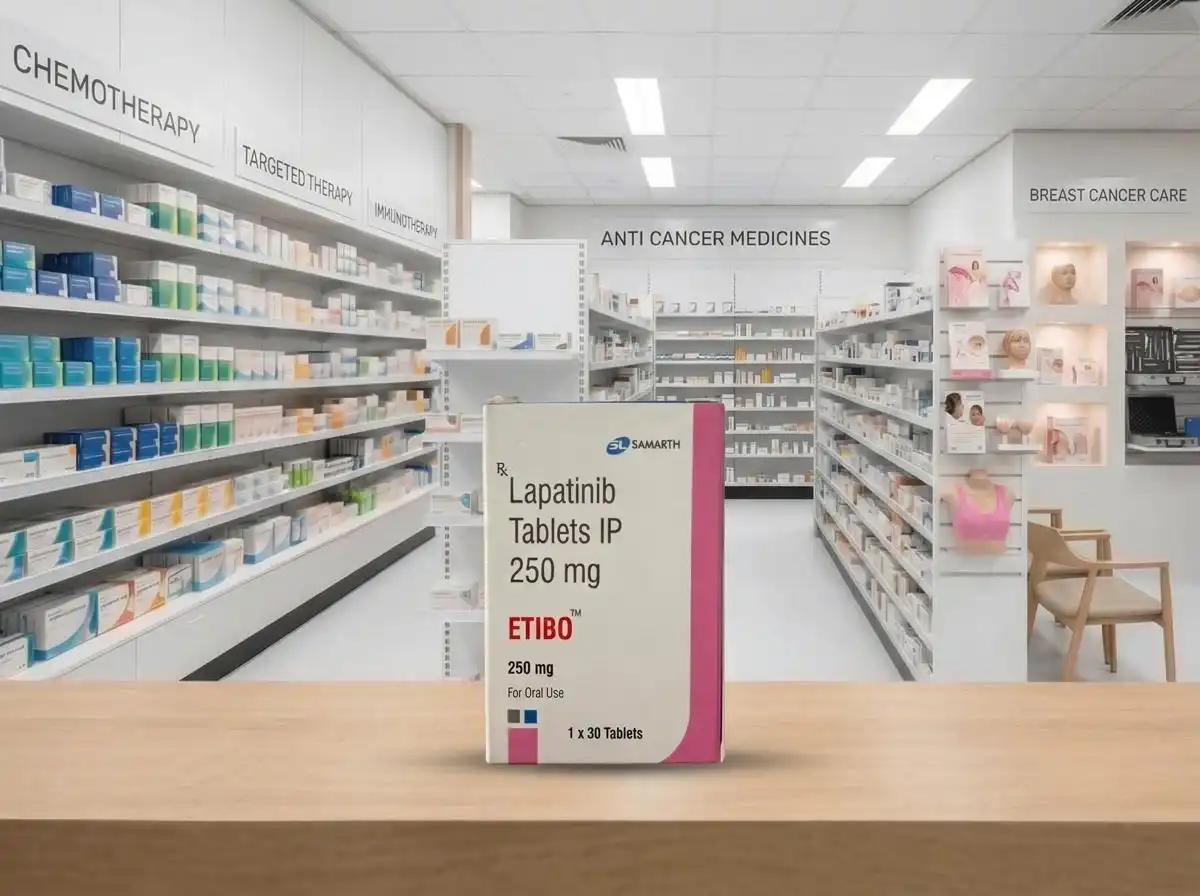
ETIBO 250MG TABLET
₹2,415.00Current price is: ₹2,415.00. Original price was: ₹10,840.50.
Etibo 250mg Tablet contains Lapatinib, a medication used in the treatment of certain types of breast cancer, particularly HER2-positive breast cancer.
25 in stock
Add to cart
Buy Now
The clinical profile of Lapatinib is best viewed through its combination of mechanism and disease-specific use. Inhibits HER2 and EGFR intracellular tyrosine kinase domains. HER2 biology is central to treatment selection, and the clinical role depends on the tumor’s HER2 status and disease setting. It is listed as Targeted Therapy; HER2-Directed Therapy; TKI within the HER2/EGFR tyrosine kinase inhibitor class. The database associates it with Breast Cancer and records the following treatment contexts: HER2-positive advanced/metastatic breast cancer in selected prior-treatment settings. Regimen examples include Lapatinib + capecitabine; lapatinib + trastuzumab; endocrine therapy combinations. These details are more informative than the drug class alone because they show where the medicine has a defined role and which treatment partners may accompany it. Molecular and disease-specific eligibility can therefore be more important than tumor location alone when the treatment is considered. The appropriate context can also depend on factors explicitly recorded in the indication, including molecular findings, receptor expression, disease extent, previous treatment, or the patient’s treatment pathway. Related medicines may share a class while differing in target, selectivity, or clinical positioning, so those distinctions should not be overlooked. This description is intentionally written as a reference entry rather than a protocol. It contains no individualized dose, schedule, or patient-specific recommendation, and current labeling should be checked for changes.
| Therapy Category | Her2-Directed Therapy, Targeted Therapy, Tki |
|---|---|
| Protocols/Regimens | Endocrine Therapy Combinations, Lapatinib + Capecitabine, Lapatinib + Trastuzumab |
| Primary Indications | Her2-Positive Advanced/Metastatic Breast Cancer In Selected Prior-Treatment Settings |
| Cancer/Tumor Types | Breast Cancer |
Related products
-47%Hot




-49%

KIXTA 125mg CAPSULE
₹1,150.00Current price is: ₹1,150.00. Original price was: ₹2,245.31.

-17%Hot

RAMIVEN 100MG TABLET
₹18,600.00Current price is: ₹18,600.00. Original price was: ₹22,383.75.
-65%