- Your cart is empty
- Continue Shopping



Product

DACARZER 200MG INJECTION
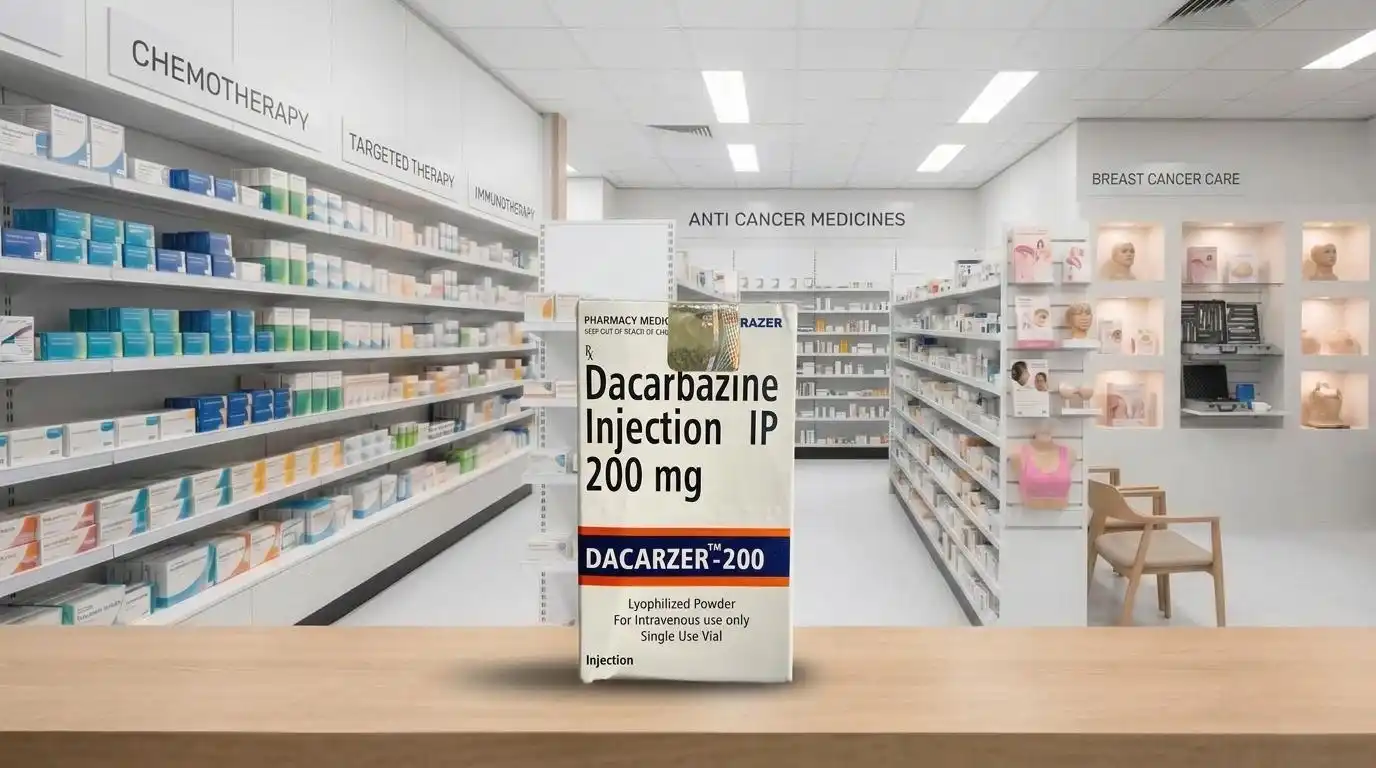
DACARZER 200MG INJECTION
Dacarzer 200mg Injection contains Dacarbazine, a chemotherapy medication commonly used to treat certain types of cancer, such as Hodgkin's lymphoma and malignant melanoma.
Add to cart
Buy Now
The defining feature of Dacarbazine is its triazene alkylating agent activity. Metabolically activated to compounds that methylate DNA and impair replication. The cytotoxic effect arises from damaging tumor-cell DNA, a mechanism that supports use across several malignancies and also contributes to treatment-related toxicity. Within this database it is listed under Chemotherapy; Alkylating Agent. The principal indications are Classical Hodgkin lymphoma; metastatic melanoma in selected regimens, with Hodgkin Lymphoma; Melanoma identified as the associated tumor types. Its treatment role can differ substantially between these settings, so the disease context matters as much as the drug class. Regimens listed for the medicine include ABVD; dacarbazine-based melanoma regimens. Its clinical role is defined by the disease-specific regimen, treatment intent, and patient-selection criteria associated with the listed indications. Where a molecular alteration, receptor status, or prior-treatment requirement appears in the indication, that criterion is part of the clinical context rather than an optional detail. The medicine may consequently occupy an induction, maintenance, adjuvant, metastatic, salvage, or supportive position depending on the setting recorded here. The summary is descriptive and does not provide individualized dosing or administration instructions. Current product information and disease-specific guidance should be checked before clinical application.
Additional Information
| Therapy Category | Alkylating Agent, Chemotherapy |
|---|---|
| Protocols/Regimens | Abvd, Dacarbazine-Based Melanoma Regimens |
| Primary Indications | Classical Hodgkin Lymphoma, Metastatic Melanoma In Selected Regimens |
| Cancer/Tumor Types | Hodgkin Lymphoma, Melanoma |
Related products
-10%
OPDYTA 40MG INJECTION
₹39,500.00Current price is: ₹39,500.00. Original price was: ₹43,780.00.
-50%


-18%
-26%